
Artex ceilings and walls were very popular between the decades of 1960s and 1970s, and even up until the early 1980s. During this period, almost all Artex and textured coatings contained asbestos. The substance was banned because it causes cancer and other serious illnesses when inhaled.
If your home has Artex that was installed before 1999, there's a chance it could contain asbestos. Thankfully, safe removal is possible when conducted by a professional company. It will cost an average of £2000 for Artex removal through a whole house and £260 for a single surface, but let's take a closer look at the figures.
At Asbestos SOS, you can trust us with your asbestos Artex removal. Our highly trained and professional team will take you through the entire process, step by step. We can test your Artex for the presence of asbestos and then develop a plan for removal based on factors such as the type of surface, the condition of the Artex, its thickness, and more. We will also give you a clear estimate for the Artex removal cost so you know where you stand from the very start.
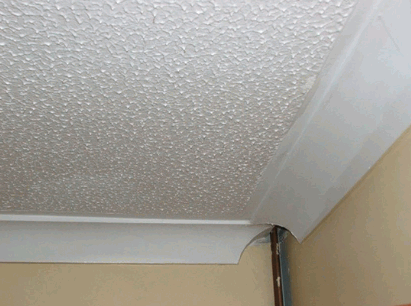
Artex is a brand name. Like Hoover, Sellotape, and Blu Tak, however, it is commonly used to refer to all types of textured coatings for walls and ceilings. We will refer to these as Artex, although different companies made very similar products. The Artex surface decorative coating will usually be in a swirl pattern and with stippling effects.
Artex is a type of decorative or textured coating for walls and ceilings. It became popular in the 1960s and 1970s. In part, this was due to the boom in house building. There was suddenly a huge demand for plasterers that couldn't be met.
An Artex coating doesn't require the same level of skill or training that standard plastering does, so it could be completed by non-plasterers using a comb to make the patterns.
Artex is similar to plaster and is made from cement and other materials. Asbestos was often used as a strengthener/hardener and to add fire resistance. Generally, white asbestos (chrysolite) was used in concentrations from 1% up to 4%.
Not all Artex will contain asbestos material. In fact, asbestos-free Artex was developed in the 1970s (but wasn't nearly as popular) and the production of asbestos-containing wall or ceiling coverings was entirely prohibited in 1984. The vast majority of Artex ceilings and walls installed before 1985 will contain asbestos.
The full asbestos ban didn't come into effect until 1999. So an Artex ceiling installed before that point will always have the potential to contain asbestos, even if it was from 1985 onwards. The Artex could have been imported or old stock could have been used, for example.
Gain insights: Asbestos Artex Removal

Asbestos is a naturally occurring mineral that consists of tiny fibres. It has a variety of properties that made it very popular as a building material (e.g. fire, electricity, water, and heat resistance) but it has been completely banned in the UK since 1999.
This is because ingesting or inhaling asbestos fibres poses a serious, and often fatal, health risk.
These tiny asbestos fibres can't be expelled by the body so they remain in the lungs or digestive system. Over decades, the presence of the fibres can trigger a range of health conditions. These include:
In total, approximately 5,000 people die per year in the UK from diseases related to asbestos exposure.

It is impossible to tell if your Artex coating contains asbestos just by looking. Asbestos-free Artex and asbestos-containing Artex result in the same visual finish. They will both be white, with decorative textures.
If your Artex was installed before 1985, it is almost certain to contain asbestos. If it was installed between 1985 and 1999, then there is still a chance that it could contain asbestos.
In either case, it is always a good idea to get asbestos testing done. You can do this at home with an asbestos testing kit, but this isn't always advisable. These kits aren't as accurate as the testing done by a professional.
If you suspect that your Artex may contain asbestos, we can help. Our team will conduct thorough professional testing to find out if you have asbestos in your walls or ceilings.

One of the reasons why the Artex trend disappeared is because of how difficult it is to remove. Putting to one side the safety issues, trying to remove Artex can feel almost impossible. It is a strong, hard substance that adheres very strongly to its underlying surface. Breaking this bond and removing the coating is both messy and time-consuming.
If you have discovered that your Artex walls or ceilings contain asbestos, then you will want to look at the next steps. Let's take a look at what removing Artex involves and what your options are.

Artex ceiling removal can be costly and time-consuming because of the risks and intricacies of the job. And you don't always have to go down the full removal route.
Asbestos that is in situ doesn't pose too much of a health risk. Asbestos-containing artex will have the asbestos fibres completely sealed within the material and with a coat of emulsion paint on top. This means that they are highly unlikely to become airborne.
Because of this, many people choose to leave the asbestos Artex in place and create a covering for it.
The danger related to asbestos Artex comes when it is disturbed in some way. This could be through accidental damage, drilling large holes, or removal attempts. Anything that creates holes, cracks, or cuts in the asbestos Artex will cause dust particles to be released into the air. These particles will contain asbestos fibres.
If you choose not to go forward with the complete removal of your asbestos Artex, then the potential for health risks will remain in your home.
Another reason why many people choose to go for full removal is that the presence of asbestos can lower the value of the property. It will need to be declared on the survey given to potential buyers and will often result in your receiving a lower price than you otherwise would have.
Getting asbestos removed does come at a cost. It can be worth it, however, because of the extra value that it adds to your home and the peace of mind it will afford you once the asbestos materials are removed.
If you decide to have your Artex removed, the process will depend on a few factors. When you get in touch with us at Asbestos SOS, we will survey your Artex to determine what the specific process will need to be for removal and we can take you through what the costs are likely to be.

Many homeowners decide that they would prefer to keep their ceilings or walls Artex and cover them over. The cover-up can either be done with a plasterboard or by using a plaster skim.
Plasterboarding over the Artex will create a new smooth surface, although you will lose some space as you are essentially creating a new wall or ceiling on top of the old Artex.
You can expect to pay an average of £660 for plasterboarding over a ceiling.
This works out as:
Over Skimming involves sealing all the Artex with PVA and then skimming several layers of plaster over the top. Depending on the depth and condition of Artex, this method isn't always possible.
You can expect to pay an average of around £400 for plaster skimming over Artex on a ceiling.
This works out as:
There are two main Artex removal techniques: steaming and X-Tex. Both of these are wet methods of removal. Asbestos is usually removed using wet techniques because this reduces the chance of asbestos fibres being released.
Another technique is sand removal. This is a dry technique and is used less than steaming and X-Tex methods because it can be more risky. Although, proper safety precautions would always be met by the company doing the removal.
Artex removal costs will be split between the cost of materials and labour. With this type of work, it is the labour costs that tend to be the majority. Removing Artex is a time-consuming and labour-intensive task.
Dive into details: Asbestos Ceilings And Ceiling Tile Removal Cost

This involves removing Artex plastering by scraping and sanding the surface away. It can be difficult to do safely because the technique does produce asbestos dust, which contains deadly fibres.
A wallpaper steamer can be used to wet the Artex before removal. The heat and water will soften the Artex, making it easier to remove, and will also help to prevent asbestos fibres from being released into the air.
Once the Artex is wet, then it can be removed using either hand or mechanical tools. This technique is often more effective for thinner layers of Artex than thicker layers.
X-Tex is a gel-like substance that is highly absorbable and stays wet for long periods. When it is applied to Artex, this means that the moisture reaches deep into the Artex coating, minimising the chance of dry patches that could release fibres when disturbed.
Staying wet for a long time gives the removal contractors more time to work during the removal process. This technique works well for both thick and thin layers of Artex.
The average asbestos removal cost for Artex is £27.5 per square metre.
This works out as:
The cost will vary depending on:
An asbestos survey will usually cost between £50 and £200 (depending on whether you have a small sample tested or a full survey). A less accurate home testing kit is approximately £30.
Many people with pre-1985 Artex choose to work on the assumption that it does contain Asbestos and go forward with removal.
If the Artex was applied directly to a plasterboard, then the process of removal is relatively simple and will involve removing the entire plasterboard as a whole.
If, however, the Artex has been applied to a plastered wall or directly to concrete, then the process becomes a lot more difficult because the Artex itself will need to be removed. This will be reflected in the cost due to the increased labour and time.
Once the Artex is removed, you will likely need to have the walls or ceilings replastered, whether that be wet plaster or plasterboard. The costs for these are outlined above.
You will also need to redecorate.
The average cost for a painter and decorator to paint a room is £250.
While technically, nothing is stopping you from removing asbestos Artex yourself, it is highly inadvisable. Asbestos removal jobs are dangerous. There is no safe level of asbestos inhalation. Any amount of asbestos fibres in your body can trigger a fatal disease.
How to dispose of the Artex is also a factor to consider. Asbestos is hazardous waste and can't simply be placed in a household bin. It needs to be handled safely and disposed of in specific landfill sites that will handle the material.

If you suspect that your Artex contains asbestos, we can help. The first step will be to conduct precise testing to determine if there is the presence of asbestos.
Once the asbestos is confirmed, then we will work with you to develop a plan for how to handle the Artex removal. We will also provide you with a detailed quote for the costs that will be involved.
Our team is highly trained in dealing with asbestos and is fully up to date with asbestos regulations. They take all of the necessary safety precautions to ensure that everyone is kept safe during removal and will work with you to decide on the best removal method for you and your property. They will also arrange for safe disposal of the asbestos waste.
If you have any questions about how to start the process and what it will involve, please don't hesitate to get in touch. We are looking forward to hearing from you.

